our factories

Grestel 1 | Grestel 2 | Grestel 3 | Ecogres

Passion for Innovation

As a leading Portuguese stoneware manufacturer, we proudly oversee a portfolio of four exceptional factories,
producing more than 1.200.000 pieces per month.
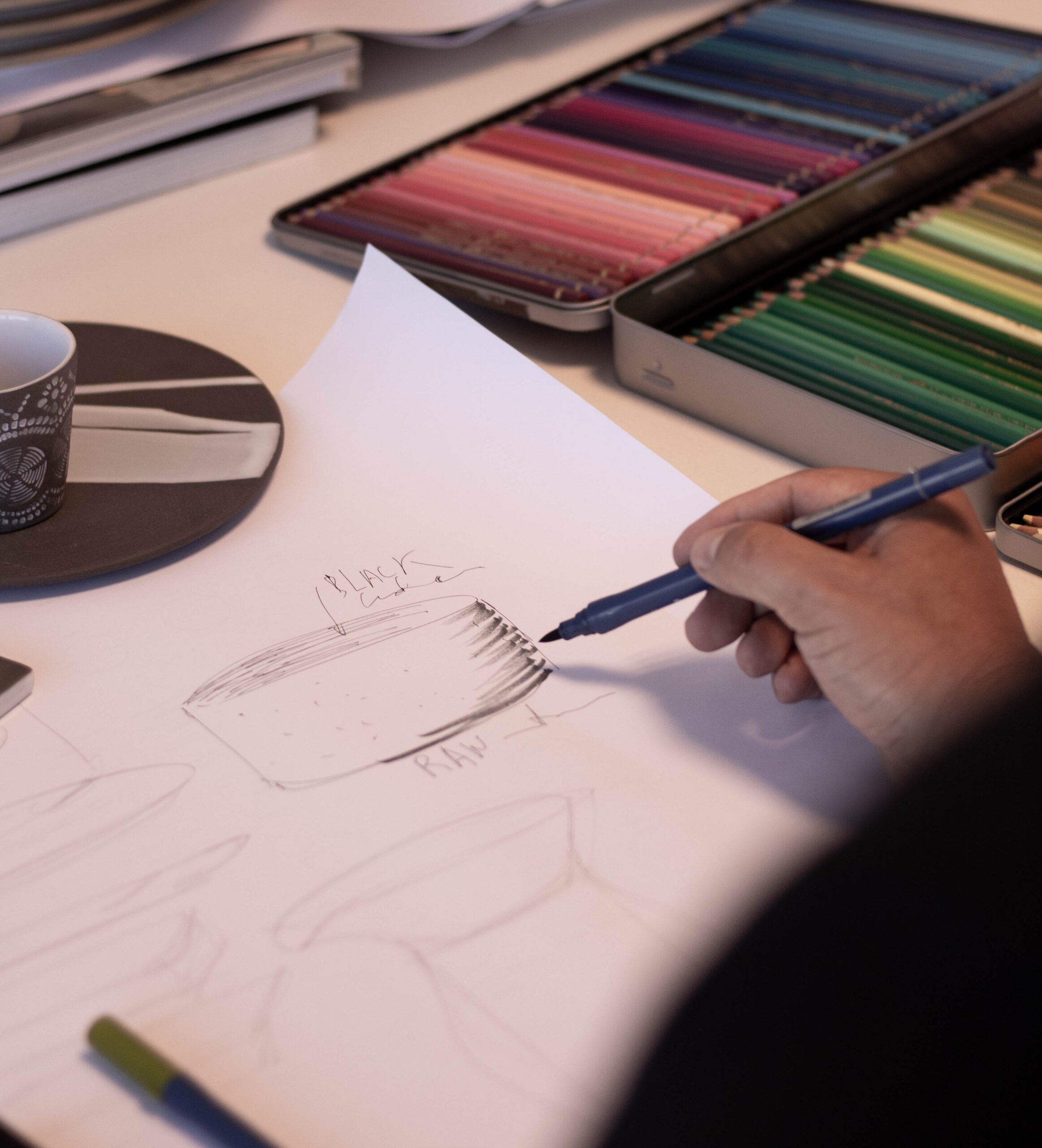
Each piece of stoneware begins with a spark of inspiration and a meticulous design process that prioritizes innovation and sustainability.
Our talented designers consider every aspect, from form and ergonomics to aesthetics and the product’s life cycle, ensuring minimal environmental impact. We source raw materials locally from Portugal’s finest natural resources and incorporate recycled elements to enhance our commitment to sustainability.

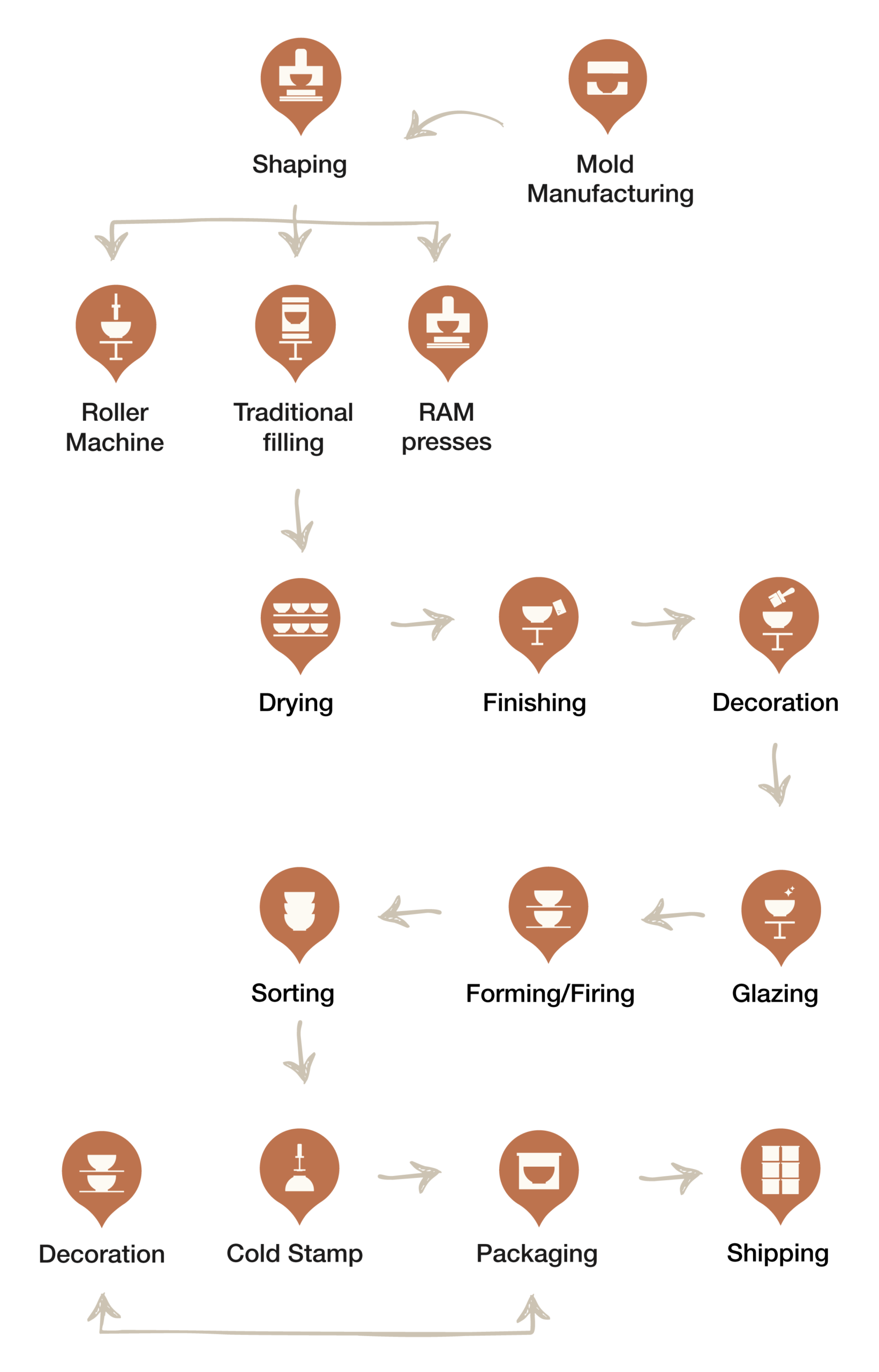
The Stoneware Manufacturing Process

Our stoneware is crafted from natural clay and mineral-based materials, making it eco-friendly and biodegradable, with a manufacturing process that uses significantly less energy. Additionally, all of our excess clay is reused.
Mold Manufacturing

Where Design Takes Shape

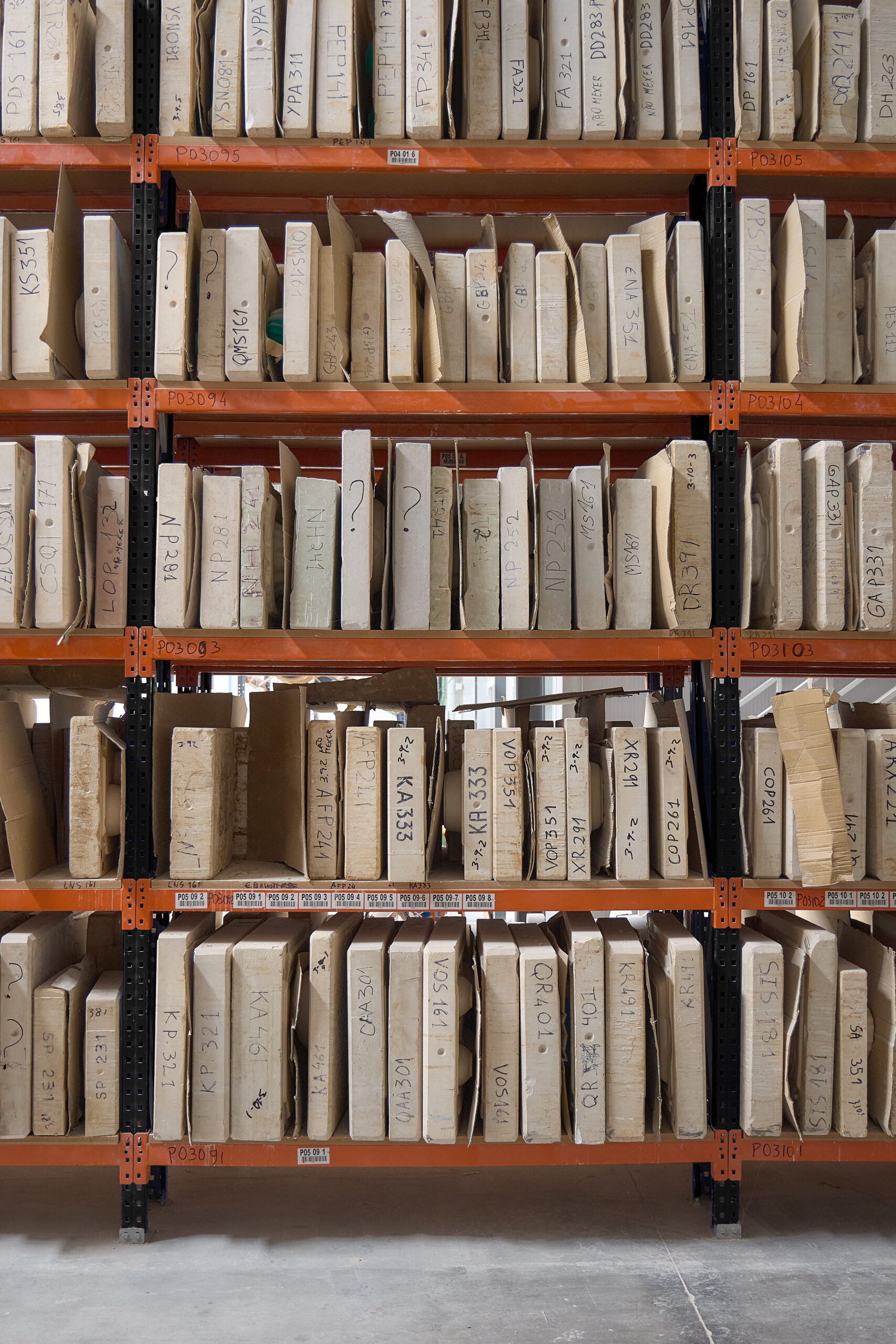
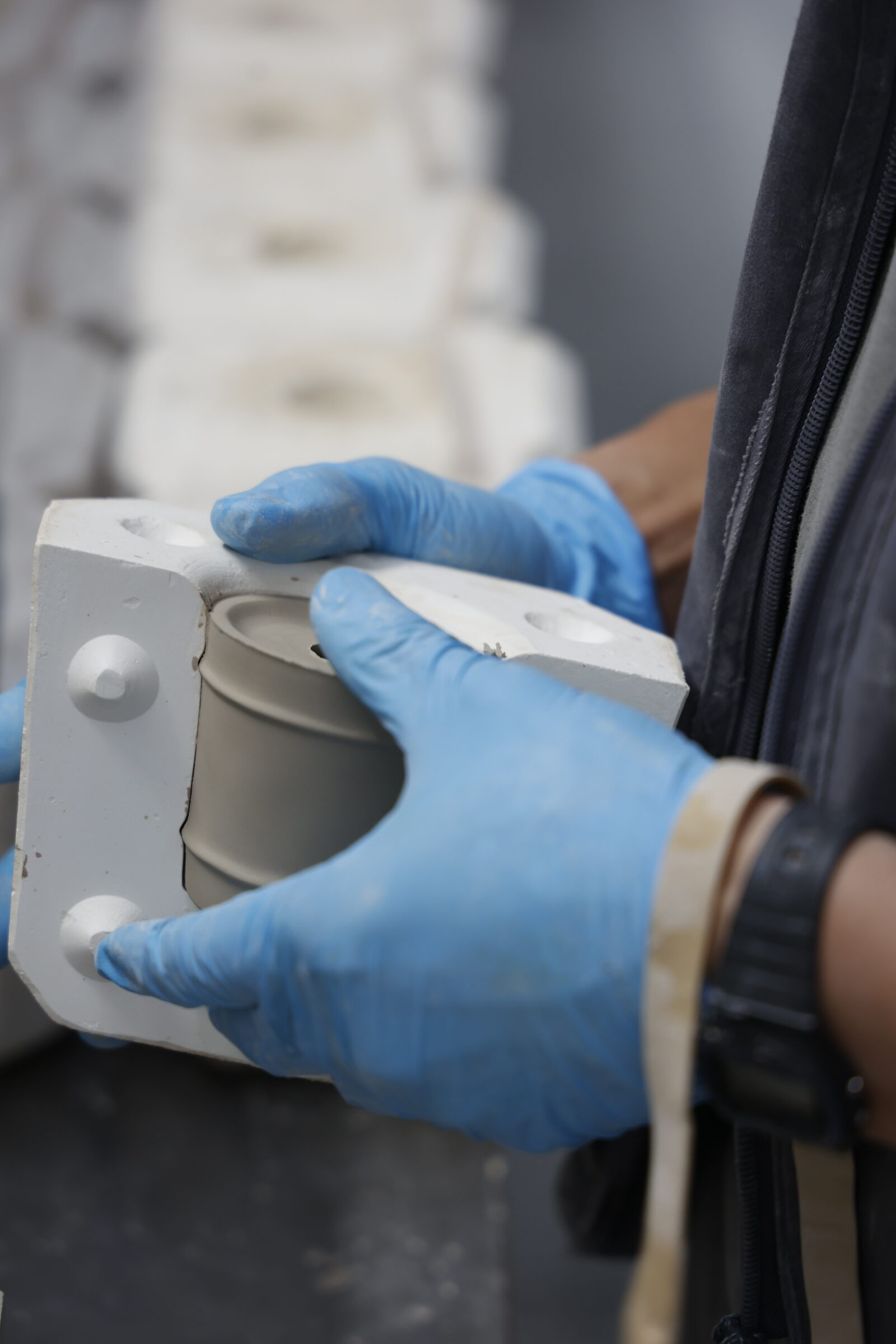
Each piece begins its journey in a carefully crafted mold that establishes its form and character. Because our molds are designed and produced in-house, we maintain precise control over every detail. This process ensures that each stoneware piece meets our uncompromising standards for quality, innovation, and aesthetic excellence.
Slip Casting

The ancestral art

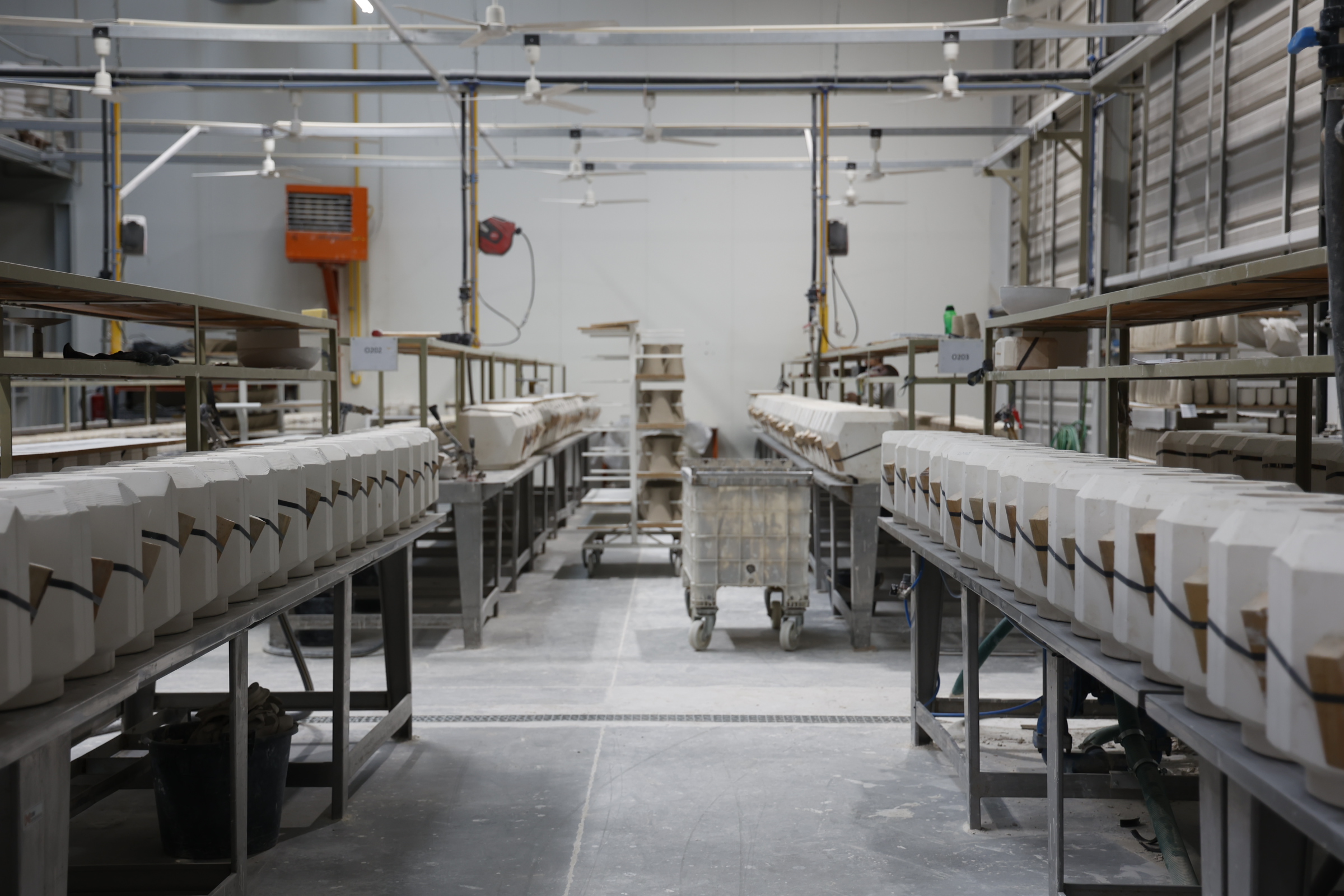
The process begins with slip, a refined liquid clay, carefully poured into porous plaster molds. These molds, acting almost like memory holders, gradually absorb water from the suspension, allowing the clay particles to form a consistent layer against the mold walls. Once the desired wall thickness is reached, the excess slip is drained.
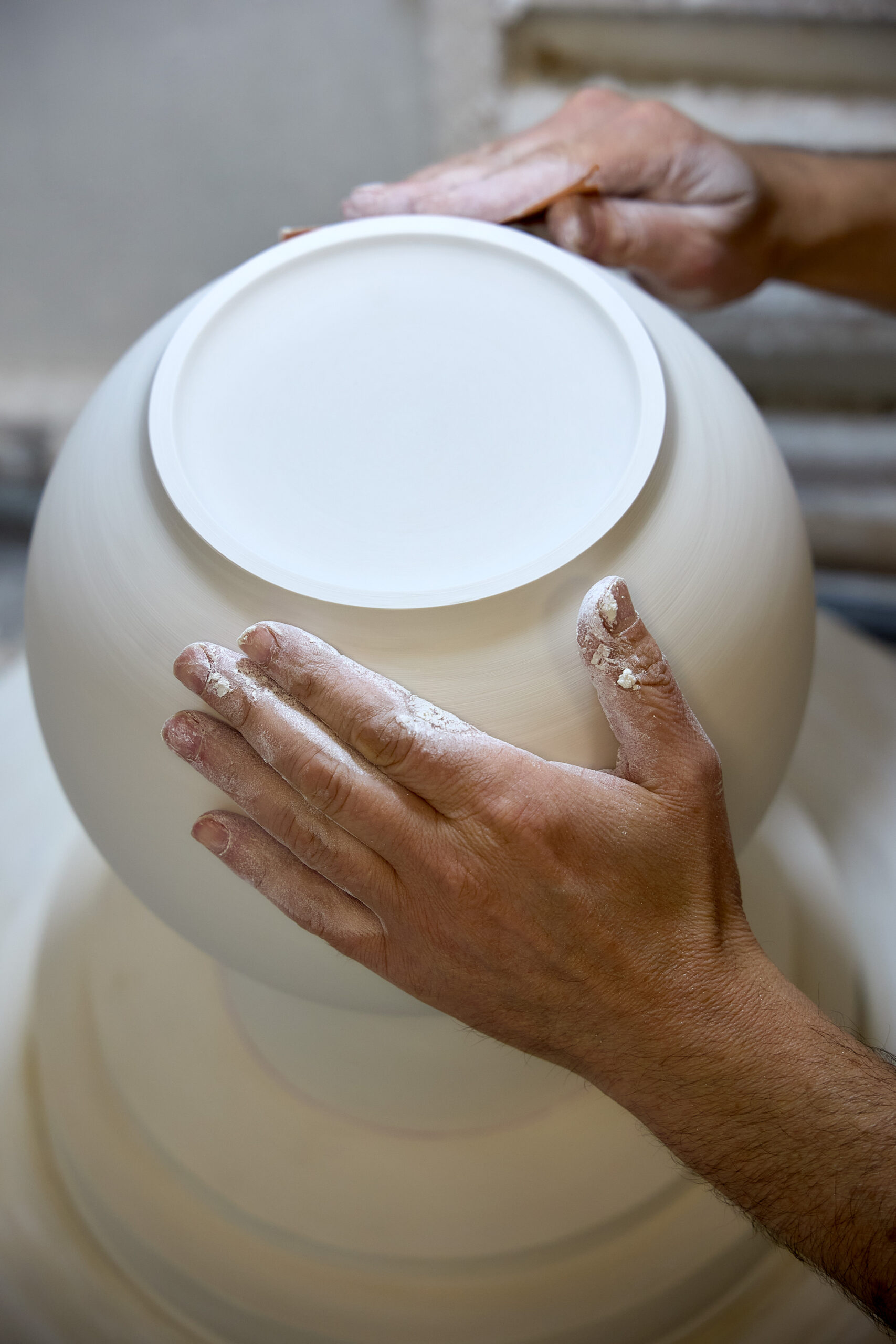
The piece rests in the mold until it reaches the ideal consistency for demolding. Once removed, it is air-dried and then moved to the finishing stage where experienced hands trim and sponge the surface to remove any excess material or imperfections. This is when the unique character of each piece begins to emerge.
Decoration

Artisan Touch, Unique Finish

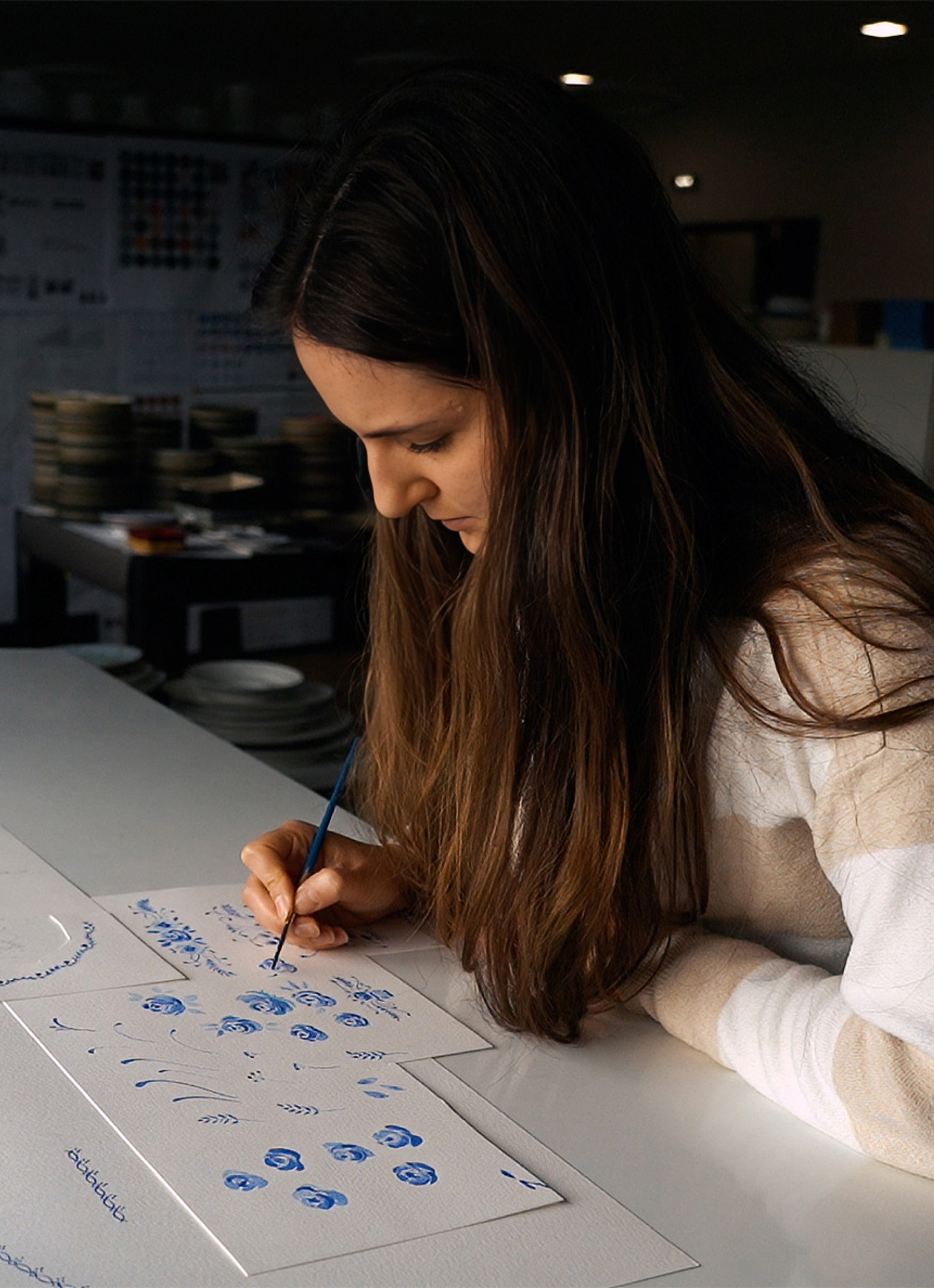
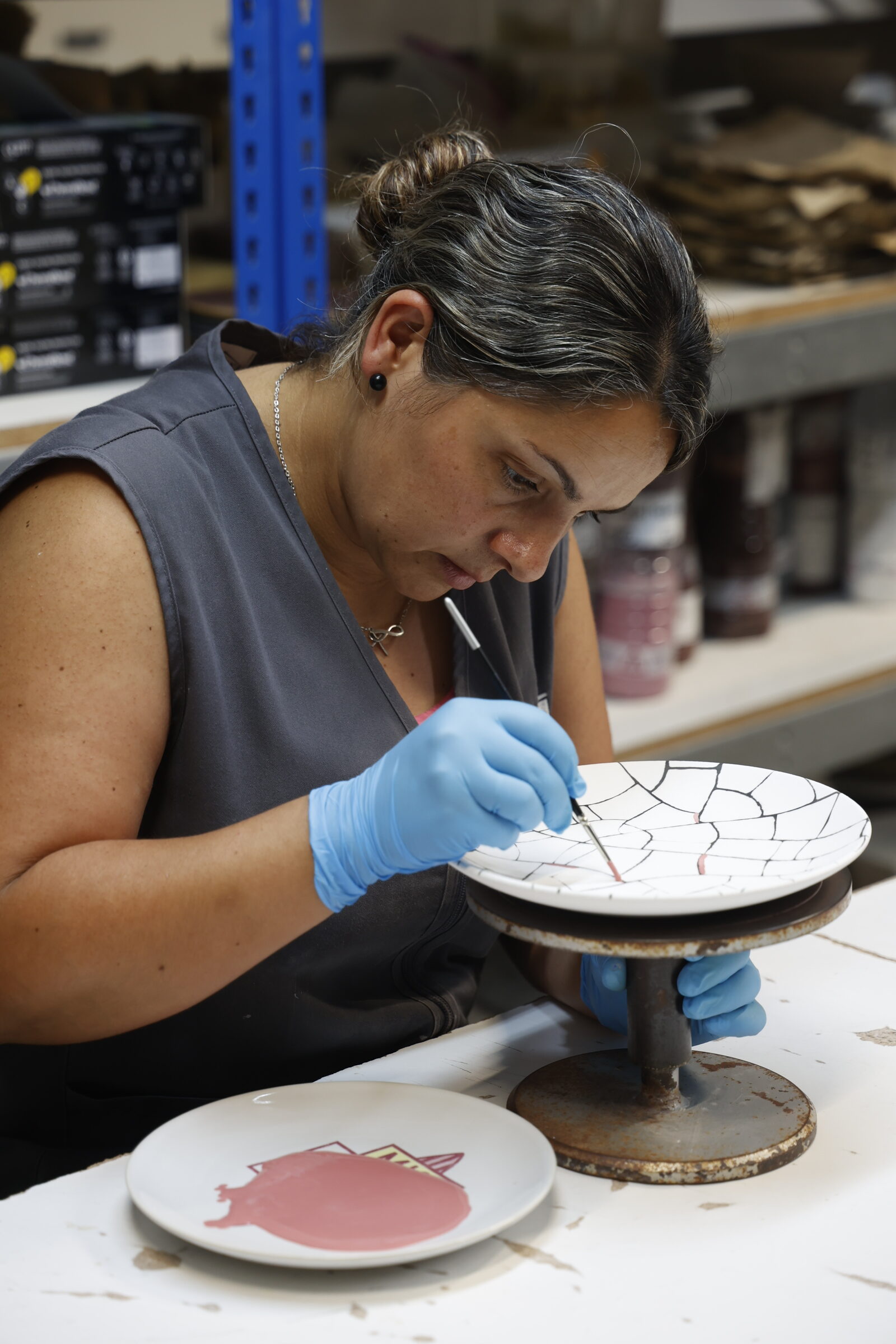
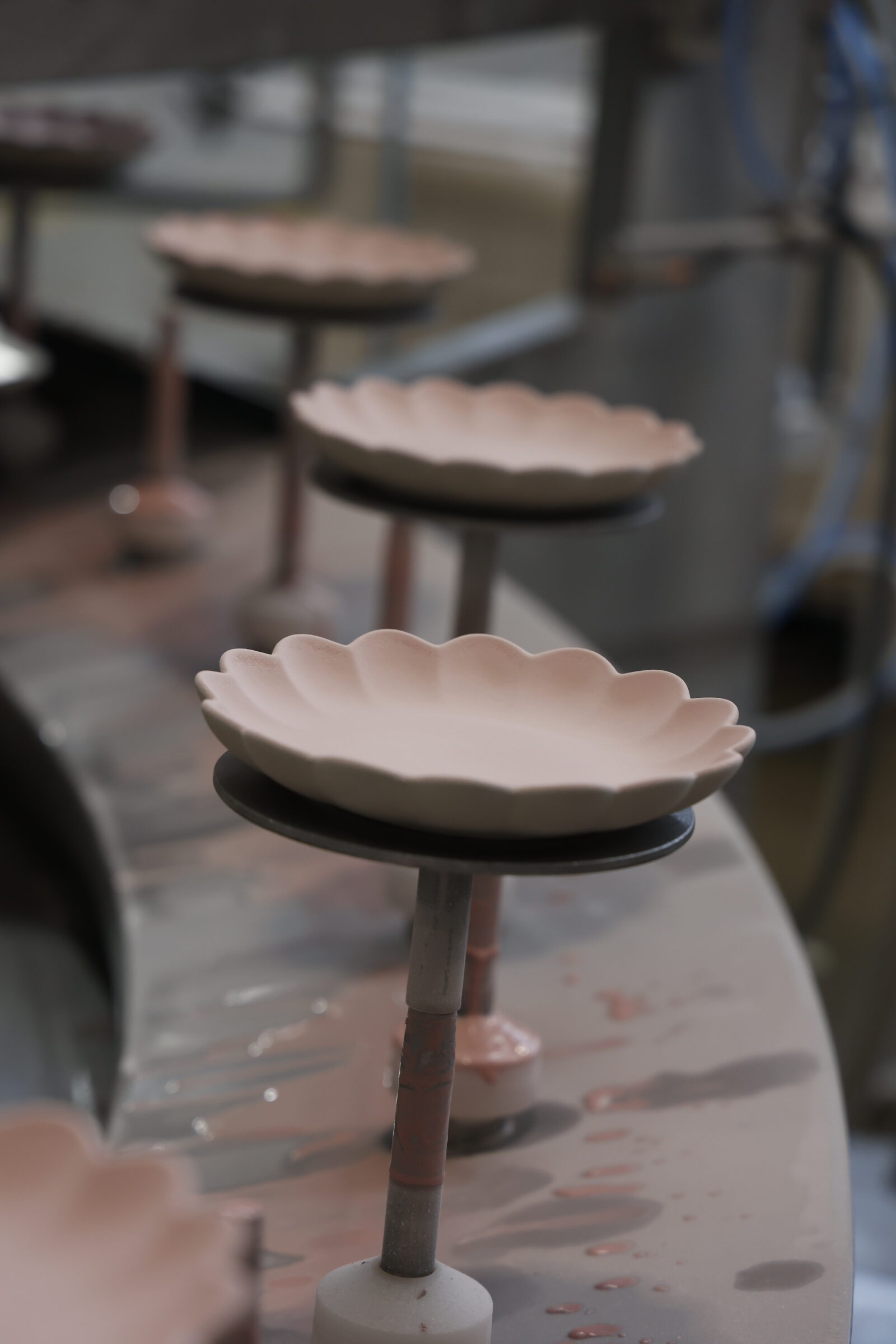
After shaping and drying, the pieces proceed to decoration, a stage where creativity and technique unite. Decoration can be applied before glazing, between two layers of glaze, or even after glazing depending on the desired effect.
This phase involves the manual application of ceramic pigments, frits, and other decorative materials using techniques such as brushing, sponging, combing, or carving, each creating distinct surface textures and patterns.
There are various glaze application methods depending on the complexity of the piece’s form. The most common techniques include spraying, either automatic or manual, and dipping. Regardless of the method, the goal remains the same: to prepare the surface for firing where intense heat will bring out the full essence of the ceramic piece.
Kiln

Single Firing, Lower Footprint

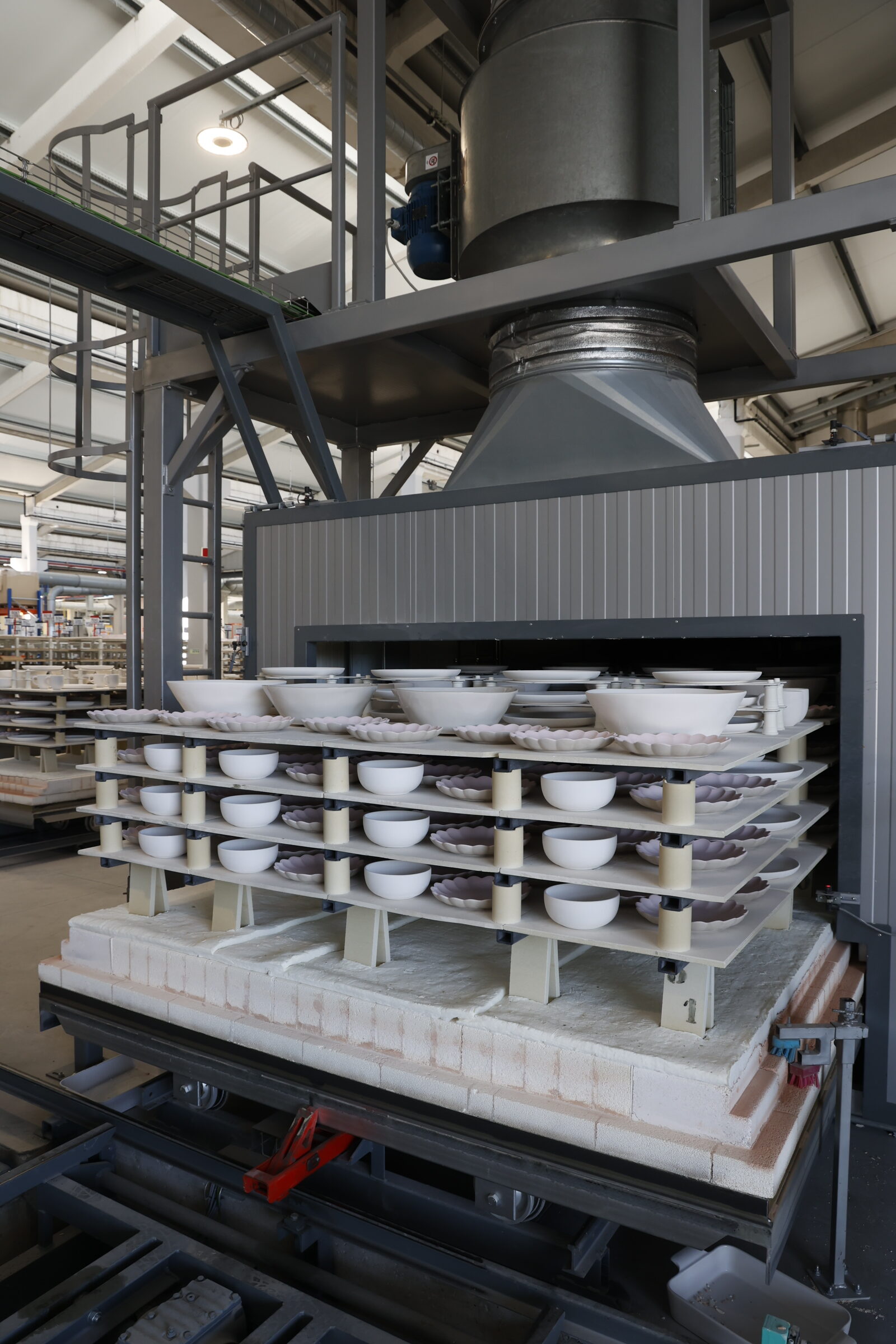
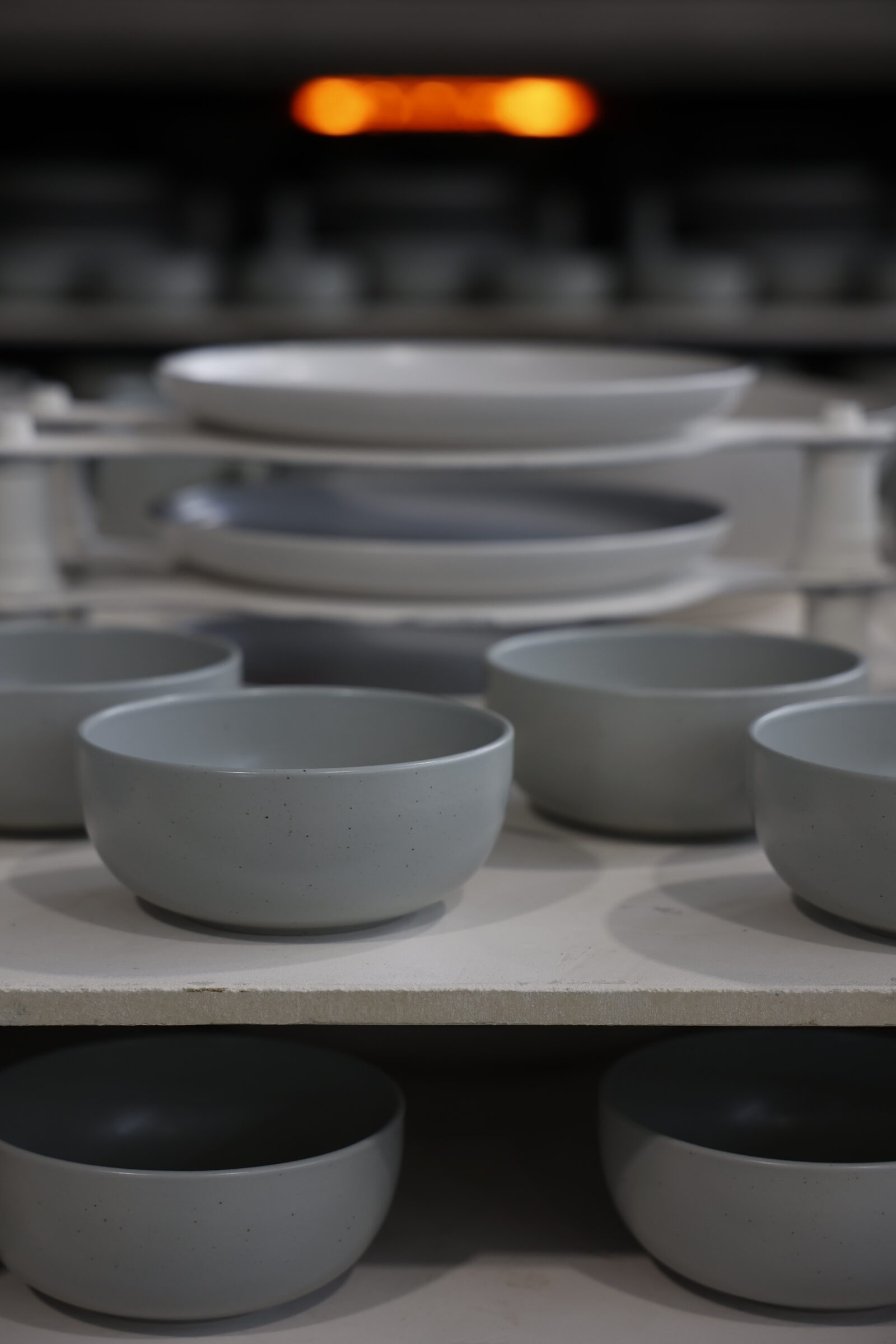
At this stage, the pieces are subjected to high temperatures ranging from 1150 ºC to 1200 ºC, in a carefully controlled process that goes far beyond simple firing. The firing cycle, which regulates the heating and cooling rates, is adjusted according to the type of kiln, the ceramic material composition, and the geometry of each piece.
This is the moment when the transformation is finalized. The elements gain strength, durability, and the distinctive texture that defines each collection. Firing is not just a technical step; it is the point at which the raw material, shaped and decorated, becomes ceramic - revealing its full character and functionality.
The factory’s kilns, equipped with a heat recovery system developed by our R&D department, are more efficient than the most advanced models on the market, allowing for the full reuse of the thermal energy generated.

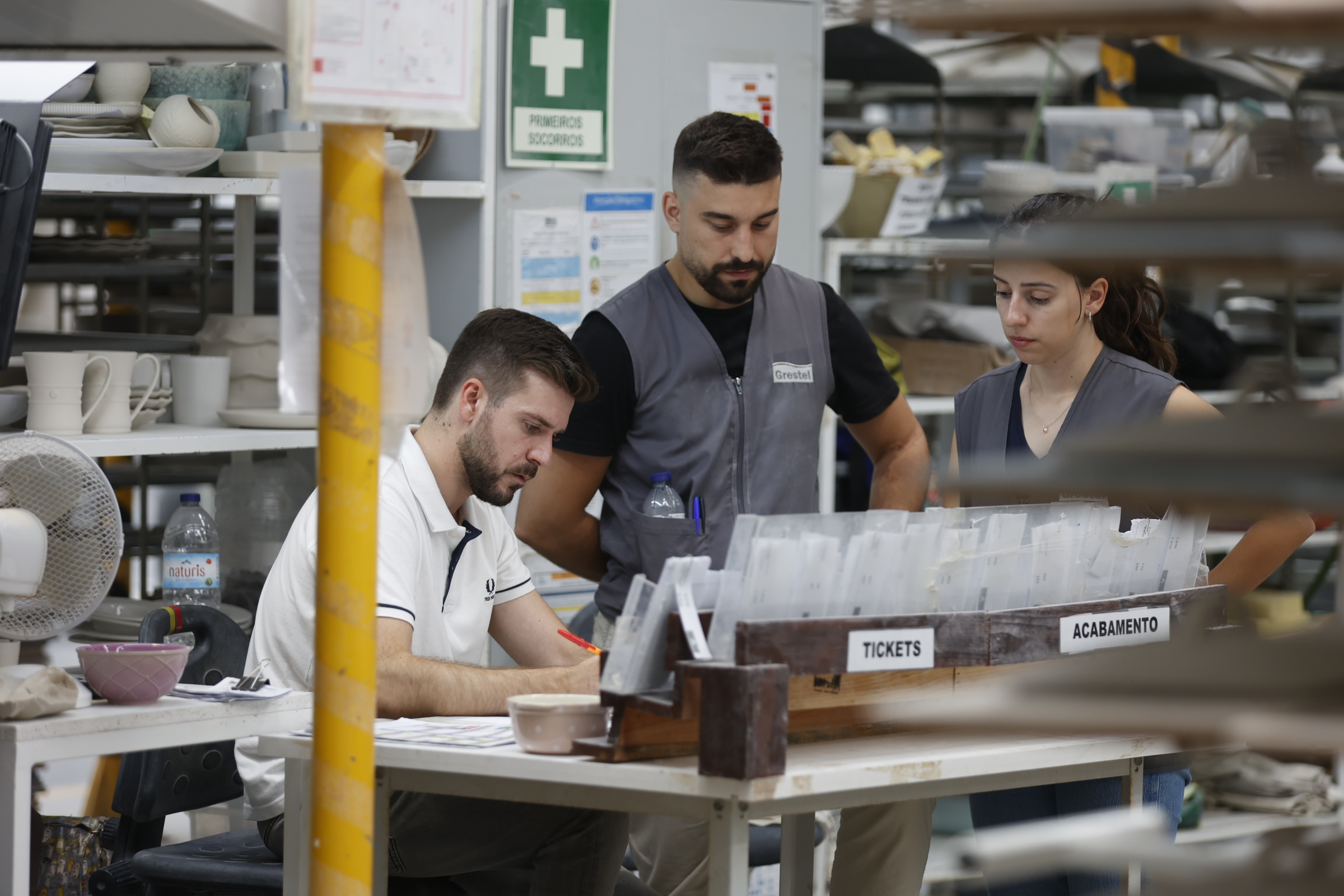
A Team Dedicated to your Success

With a global client base, we take on challenges and projects that push our expertise and keep us aligned with the latest market trends.